A Thoughtful 2026 Guide to Autism Residential Housing in the U.S.: Understanding Support Programs, Living Options, and Long-Term Care Decisions
In-Depth Analysis
The idea of residential support for autism has evolved significantly over the past decade. It is no longer limited to institutional settings. Today, it spans a wide spectrum—from small group homes to supported independent living programs.
At its core, Autism Residential care focuses on three pillars:
Safety and structure
Skill development and independence
Emotional and social support
In the United States, demand continues to rise. According to recent estimates, roughly 1 in 36 children is diagnosed with autism, and many will require varying levels of support into adulthood [Source: CDC, 2023].
This growing need has pushed providers to diversify services. Instead of one-size-fits-all care, families can now explore:
Supervised group homes
Apartment-style supported living
Transitional programs for young adults
Intensive care environments for high-support needs
Each option reflects a different philosophy—not just about care, but about what independence truly means.
Practical Applications & Tips
Choosing the right residential setting is rarely about finding the “best” option. It’s about finding the right fit.
Start by asking practical questions:
What level of daily support is needed?
How important is community integration?
Does the individual prefer routine or flexibility?
One effective approach is to map needs across three categories:
Daily Living: Cooking, hygiene, transportation
Behavioral Support: Therapy access, supervision level
Social Environment: Group interaction vs. quiet independence
Families often find clarity by visiting multiple settings. What looks ideal on paper can feel entirely different in person.
Another overlooked tip: talk to caregivers, not just administrators. The tone of daily life is shaped far more by frontline staff than by brochures.
A Real-Life Perspective
Maria, a mother from Illinois, spent years worrying about her son Daniel’s future. Diagnosed at age four, Daniel thrived in structured school environments but struggled with transitions.
When Daniel turned 21, the safety net of school-based support disappeared.
Maria initially resisted the idea of residential care. “It felt like giving up,” she admitted. But after visiting a small, community-based home, her perspective shifted.
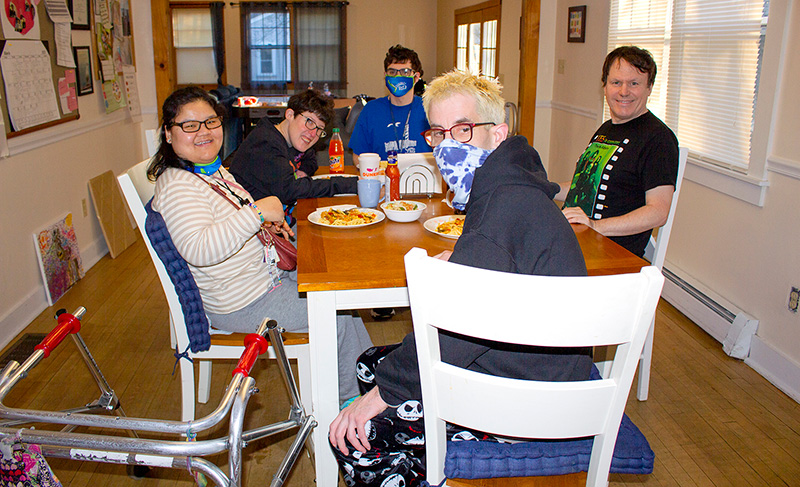
Daniel now lives with three other residents, attends a vocational program during the day, and has learned to manage simple routines independently.
“It wasn’t about letting go,” Maria later said. “It was about building a life he could actually sustain.”
Stories like this highlight a subtle truth: residential care, when done right, is not about separation—it’s about expansion.
Expert Insights & Common Mistakes
Professionals in developmental care often see the same patterns repeat.
One common mistake is waiting too long. Families delay planning until a crisis forces quick decisions, limiting available options.
Another is focusing only on cost without evaluating quality of care. While affordability matters, low-cost programs can sometimes lack adequate staffing or structure.
Experts recommend:
Starting the search at least 2–3 years in advance
Reviewing staff-to-resident ratios
Asking about turnover rates among caregivers
Consistency in staff often correlates strongly with better outcomes.
Advanced Perspective
Beyond logistics, there’s a deeper layer to consider: identity and autonomy.
Modern Autism Residential models increasingly emphasize person-centered planning—an approach that tailors care around individual preferences rather than institutional convenience.
This shift changes everything.
Instead of asking, “Where can this person fit?” providers ask, “How can this environment adapt to them?”
It’s a subtle but powerful difference, and one that defines higher-quality programs.
Trends, Data, and Emerging Research
The landscape of autism care is evolving rapidly.
Recent research points to several key trends:
Increased demand for community-based living over large facilities
Growth in technology-assisted support, including remote monitoring tools
Expansion of vocational integration programs
A study from a national developmental health institute found that individuals in smaller residential settings reported higher satisfaction and better social outcomes [Source: National Institute of Mental Health, 2022].
At the same time, workforce shortages remain a challenge, affecting availability and quality in some regions.
Source:
Understanding Adult Autism Support Systems
Housing Options for Adults with Developmental Disabilities
Transition Planning for Autism Spectrum Adults
Community-Based Living Models in the U.S.
Caregiver Workforce Trends in Disability Services
These trends suggest a future where flexibility and personalization become the standard, not the exception.
Comparing Different Options
Not all residential models serve the same purpose.
Group Homes
Offer structure and social interaction. Ideal for individuals needing moderate support.
Supported Living (Apartments)
Encourages independence with periodic assistance. Suitable for those with higher functioning levels.
Specialized Care Facilities
Provide intensive support for complex needs, including medical or behavioral challenges.
The key is alignment. A mismatch between needs and environment often leads to frustration—for both residents and families.
Common Concerns and Considerations
Families often wrestle with emotional questions long before practical ones.
Will my loved one feel abandoned?
Will they be safe?
Will they be happy?
These concerns are valid—and necessary.
The reality is that outcomes vary widely depending on program quality, staff engagement, and individual compatibility.
Transparency is critical. Programs that openly share routines, challenges, and expectations tend to build stronger trust.
It’s also important to remember that transitions take time. Adjustment periods are normal, and early discomfort doesn’t always indicate a poor fit.
Conclusion & Next Steps
Planning for long-term care is never just a checklist—it’s a journey shaped by uncertainty, hope, and careful decision-making.
Autism Residential options offer a pathway—not a perfect solution, but a meaningful one. They provide structure where it’s needed, independence where it’s possible, and support where it matters most.
If there’s one takeaway, it’s this: start early, stay informed, and trust the process.
The right environment doesn’t just support daily living—it helps build a future that feels stable, dignified, and real.
Reference:
Long-Term Outcomes for Adults with Autism
Evaluating Residential Care Quality
Family Decision-Making in Disability Care
Independent Living and Autism Research
Policy Trends in U.S. Disability Services